If the next sentence makes you slightly nervous, you are not alone. Most students feel the same before exams. But with the right plan, Social Science can actually become one of the highest-scoring subjects instead of the memory marathon it’s often labelled as.
Many students struggle because they either overread or under-revise. A structured approach makes all the difference, especially during the final month before exams. A2S Institute, known for structured academic mentoring, often emphasises smart revision instead of long-hour stress studying. Students looking for Social Studies Coaching in Pitampura often report better clarity when they follow a disciplined routine instead of random reading.
In this guide, you will learn a practical 30-day approach that aligns with exam expectations and helps you manage Class 10 board exams effectively. This is not about magic tricks; it is about planning, practice, and consistency. And yes, we will keep it realistic, not “study 18 hours a day” unrealistic.
Understanding the 30-Day Strategy Framework
The idea behind a strong SST revision plan is simple: revise, practice, and improve weak areas consistently instead of cramming at the end.
The social science NCERT textbooks form the base for most questions in exams, so everything in your preparation should revolve around them. Many educators, including mentors at A2S Institute, stress that understanding concepts beats memorising paragraphs blindly.
A structured SST revision plan helps students answer three critical questions:
What should I revise daily?
How do I balance History, Geography, Civics, and Economics?
How do I avoid forgetting what I studied?
Week-Wise Breakdown for Smart Preparation
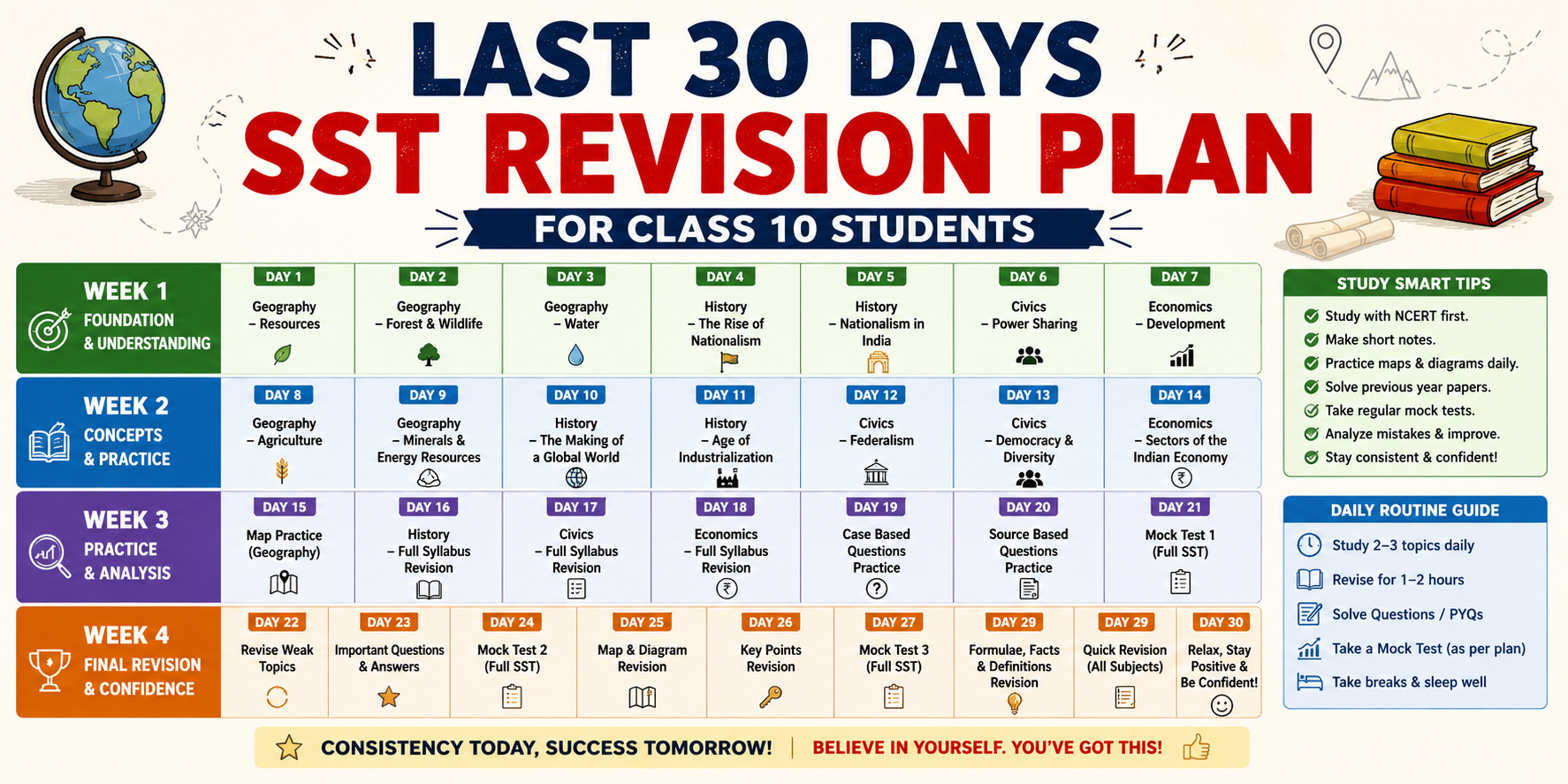
A good SST revision plan divides 30 days into four clear phases:
Week 1: Foundation Revision: Focus on reading all chapters once. Don’t panic if you forget details. The goal is familiarity, not mastery. At this stage, students at A2S Institute often begin building quick revision notes and SST-style summaries for each chapter. These notes become lifesavers later.
Week 2: Concept Strengthening: Now you go deeper into weak topics. Geography maps, Civics definitions, and Economics concepts need attention. If you're enrolled in the best coaching institute in Pitampura, this is where teachers usually emphasise diagram-based and case-study questions.
You should also begin a social science revision timetable to structure daily tasks instead of guessing what to study.
Week 3: Practice Phase: This is where things get serious. Start solving previous year papers and sample papers.
Build an SST question practice plan:
1 sample paper daily
Review mistakes
Rewrite incorrect answers
This phase improves writing speed and accuracy, which matters a lot in Class 10 board exams. Students also use SST exam preparation strategy sessions at coaching centres like A2S Institute to refine answer presentations.
Week 4: Final Revision Sprint: Now you shift to revision mode only. No new topics.
This is the stage where students often rely on SST last-minute revision tips like:
Revising keywords only
Practising maps daily
Revisiting weak chapters
A focused SST revision plan during this week prevents confusion and boosts confidence.
Practice Strategy That Actually Works
Most students study but don’t practice enough. That’s where marks drop.
A strong SST study plan for exams should include:
Mock tests twice a week
Answer writing practice
Self-evaluation
Smart Revision Techniques (With a Bit of Reality Check)
Let’s be honest, no one enjoys revising the same chapter five times. But smart revision makes it less painful. Use:
Mind maps for quick recall
Bullet-point notes
Color-coded summaries
This improves retention without turning your room into a paper explosion zone. A strong SST revision plan always includes short breaks, revision cycles, and test-based learning. And yes, even teachers at A2S Institute agree: over-studying without breaks reduces memory efficiency. So don’t try to become a robot.
Final Week Mindset and Exam Confidence
The final days before exams are more about calmness than content.
Focus on:
Revision sheets
Formula and definition recall
Light practice
Avoid starting new topics; they only create confusion. The real goal of any SST revision plan is not just to finish the syllabus but to enter the exam hall with confidence and clarity.
Conclusion: Your Final Step to SST Success
A strong SST revision plan is not about studying everything at the last moment, but about revising smartly, practising regularly, and staying consistent for 30 days. When you follow a structured routine, use NCERT-based learning, and focus on weak areas, you naturally improve your speed, accuracy, and confidence for Class 10 board exams.
Remember, Social Science becomes easier when you stop treating it like a “ratta subject” and start connecting concepts logically. A calm mind, proper revision timetable, and regular practice can genuinely change your score outcomes.
If you want guided preparation, structured study plans, and expert mentorship, visit the A2S Institute or reach out through their official channels for batch details and counselling. Start your preparation today because the right guidance at the right time makes all the difference.